
AI SEO Tools Not Ranking Content 2026? Real Reasons & Fixes
Why AI SEO Tools Don’t Rank Content on New Websites (Real Reasons)
A lot of website owners use AI SEO tools, publish dozens of articles, and then wait.
Nothing happens.
Not rankings.
No impressions.
No traction.
The usual reaction is to blame Google or assume AI content is “blocked.” That’s not what’s happening.
The real issue is how AI-generated content behaves on new websites—and why Google doesn’t trust it by default.
Let’s break down the actual reasons AI SEO tools fail to rank content on fresh domains, without excuses or surface-level advice.
AI SEO Tools Not Ranking Content: What’s Really Going Wrong
AI SEO tools are designed to produce content quickly and at scale.
Google ranks content based on usefulness, intent match, and trust.
Those two goals don’t naturally align—especially on a new website with no authority history.
Established sites can get away with average content.
New sites can’t.
That’s why AI SEO tools not ranking content is far more common on new domains than people expect.
1. Over-Optimization Is the First Red Flag
One of the most common problems with AI-generated articles is excessive optimization.
AI tools tend to:
- Repeat the same keyword phrasing
- Force variations into headings
- Follow predictable, rigid structures
To a human reader, this already feels unnatural.
To Google, it looks engineered.
This is classic AI content over-optimization, and it directly conflicts with the goals of the Google Helpful Content Update. On a new site, there’s no trust cushion to absorb these signals.
As a result, the content gets ignored.
2. AI Misses Search Intent More Than People Realize
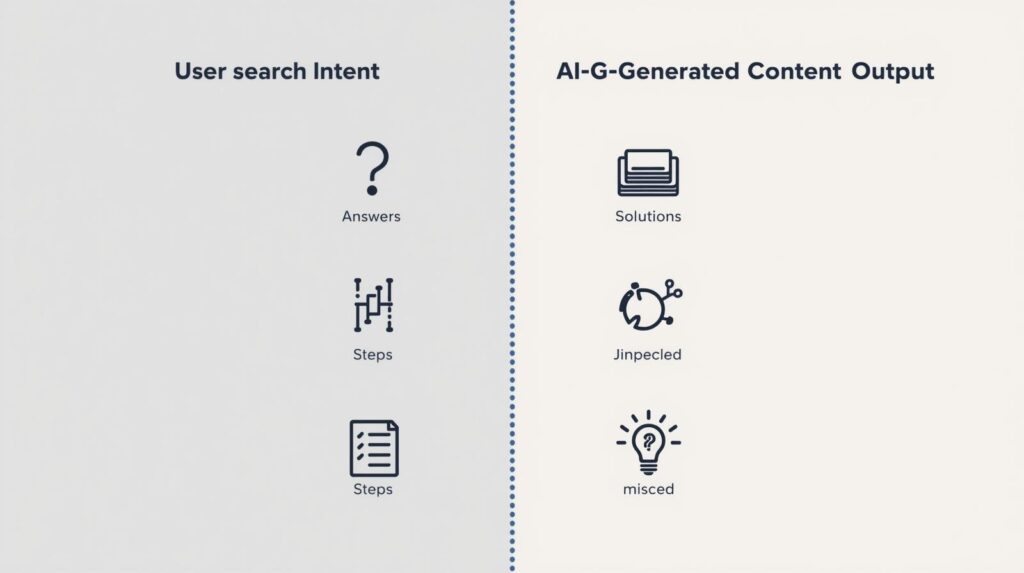
Another major reason AI content doesn’t rank on new websites is intent mismatch.
AI tools don’t understand why someone is searching.
They approximate based on patterns.
That leads to content that:
- Explains when users want solutions
- Summarizes when users want comparisons
- Talks broadly when users want specifics
When the search intent isn’t satisfied, rankings don’t happen—no matter how “optimized” the page looks.
This is one of the most overlooked reasons why AI SEO content doesn’t rank, especially for competitive or problem-driven queries.
3. Thin AI Content Looks Complete—but Isn’t
Many AI-written articles are long, structured, and readable.
They still fail.
Why?
Because they’re thin in substance.
Thin AI content usually lacks:
- First-hand experience
- Real examples
- Strategic opinions
- Clear judgment
It repeats what already exists instead of adding anything meaningful.
Google is very good at detecting this—particularly on new sites where authority hasn’t been earned yet.
Length does not equal depth, and Google knows the difference.
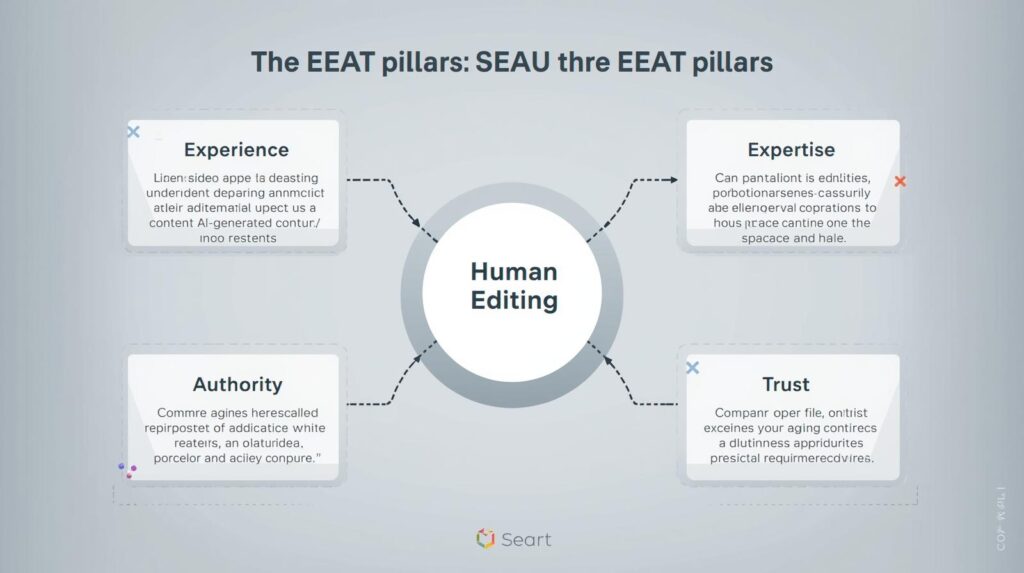
4. EEAT Is Where AI-Only Content Falls Apart
Google doesn’t require credentials on paper, but it does expect evidence of experience and expertise.
Pure AI content cannot demonstrate:
- Practical SEO decision-making
- Lessons learned from mistakes
- Nuanced trade-offs
- Real-world outcomes
This creates a gap in EEAT and AI content, especially in niches like SEO, finance, and technology.
Without human involvement, AI content rarely feels trustworthy enough to rank.
5. AI SEO Automation Ignores How New Sites Actually Grow
AI SEO automation works best on mature sites.
New websites operate under completely different rules.
New sites need:
- Narrow topical focus
- Conservative keyword selection
- Carefully built internal linking
- Slower, deliberate publishing
AI tools often do the opposite:
- Target broad keywords too early
- Publish aggressively
- Ignore site maturity
These AI SEO automation issues don’t hurt established domains—but they stall new ones completely.
Why Doesn’t AI Content Rank on Google? (Direct Answer)
Because most AI-generated content:
- Is over-optimized
- Misses search intent
- Lacks real experience
- Adds no original value
Google ranks content that helps users, not content that simply follows SEO rules.
Can AI SEO Tools Rank Content on New Websites?
They can—but only as support tools.
AI works best when it assists with:
- Drafting
- Research
- Structure
It fails when it replaces:
- Human judgment
- Strategic editing
- Intent analysis
This is why AI SEO tools vs human SEO isn’t a debate.
AI accelerates the process. Humans make it effective.
How to Fix AI Content That Doesn’t Rank
Fixing AI content isn’t about rewriting everything from scratch.
It’s about correcting the problems AI introduces.
1. Reduce Over-Optimization
- Remove forced keyword usage
- Simplify headings
- Rewrite repetitive phrasing
2. Align Precisely With Search Intent
- Identify what the user is actually trying to solve
- Cut unnecessary sections
- Answer the main question early
3. Add Human Context
- Practical observations
- Clear opinions
- Real SEO reasoning
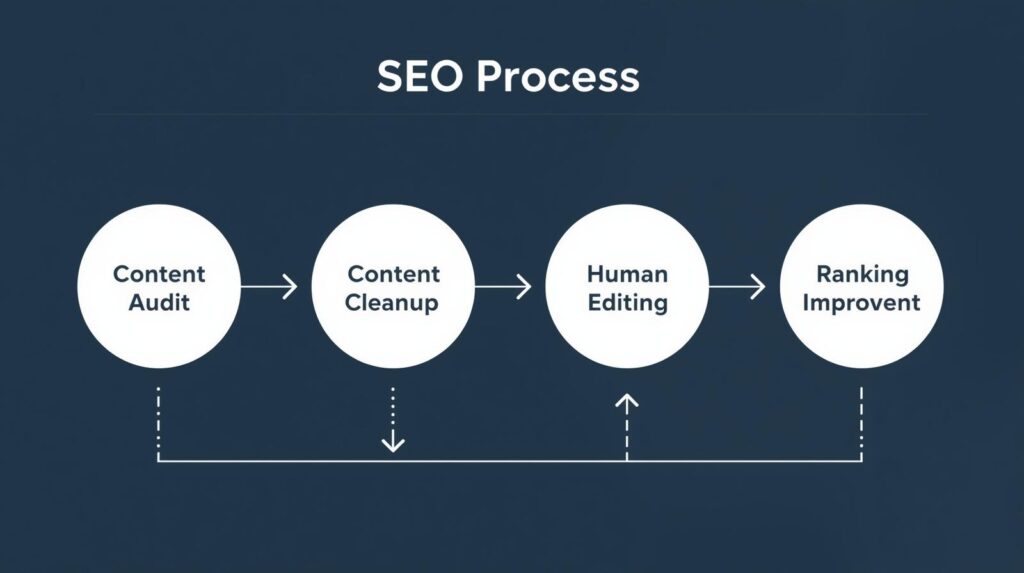
4. Run a Manual Content Audit
This step makes the biggest difference.
A proper audit identifies:
- Intent mismatches
- Thin sections
- EEAT gaps
- Structural problems
AI SEO Tools vs Human SEO: The Real Difference
AI tools are not useless.
They’re incomplete.
AI provides speed and scale.
Human SEO provides understanding and judgment.
Only one of those earns trust.
Final Takeaway: What Actually Works Now
If your AI-written content isn’t ranking on a new website, adding more AI won’t fix it.
What works is:
- Manual SEO audits
- Human-edited AI content
- Intent-focused rewrites
- Authority-driven structure
Most AI content fails because no one corrects it after generation.
Soft CTA
If you’re unsure whether your AI content aligns with what Google actually rewards, a focused review can quickly reveal the real issues.
Strong CTA
If your site relies on AI-written content and isn’t ranking, a manual SEO audit and professional AI content cleanup is the fastest way to turn unusable content into assets that can actually rank.